Tuesday, September 05, 2006
Camera Phones
I always thought cameras in phones were a weird idea until I got one. I set out to get a good phone, but as they all had cameras I ended up with one. It turns out it's great, wherever I go I have a camera, I've never taken so many photos as I have since getting my Sony Ericsson S700i. I am about to upgrade and considering a K800i which includes a Cyber-shot™3.2 mega-pixel camera with flash. Actually its more the other way round, a camera that includes a phone. The best bit is it's free with a phone contract, here in the UK.

Friday, September 01, 2006

Saturday, August 26, 2006
Completing Coltrane
I had a complaint that Impulse had not released a Box Set of John Coltrane's studio sessions from his final years.
After some research, mainly conducted at The Jazz Discography Project, Wolf's Kompaktkiste and Dave Wild, I have found the following additions to the Impulse Box Set that I think complete the available Impulse sessions of John Coltrane.
The first album was Africa/Brass, the only one released prior to those from The Classic Quartet Set:

There were two other albums that were collaborations and so weren't included in the box set:


Meditations is the last album released during his lifetime:

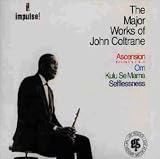
The next contains the remaining tracks released during his lifetime, but not included in the box set:
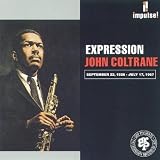
Expression was actually conceived by Coltrane before his death but did not get a release until after:
The next few are studio sessions released as albums:


The final two are often ignored, and also hard to find as they contain material by John's wife Alice Coltrane, she also accompanies him on his tracks. Cosmic Music was not on the Impulse label, but released by Coltrane Music, however it was recorded during his last few years.


Now on to the live recordings!
After some research, mainly conducted at The Jazz Discography Project, Wolf's Kompaktkiste and Dave Wild, I have found the following additions to the Impulse Box Set that I think complete the available Impulse sessions of John Coltrane.
The first album was Africa/Brass, the only one released prior to those from The Classic Quartet Set:
There were two other albums that were collaborations and so weren't included in the box set:
Meditations is the last album released during his lifetime:
The next contains the remaining tracks released during his lifetime, but not included in the box set:
Expression was actually conceived by Coltrane before his death but did not get a release until after:
The next few are studio sessions released as albums:
The final two are often ignored, and also hard to find as they contain material by John's wife Alice Coltrane, she also accompanies him on his tracks. Cosmic Music was not on the Impulse label, but released by Coltrane Music, however it was recorded during his last few years.
Now on to the live recordings!
Friday, August 25, 2006
Confluence
I noticed an interesting confluence of stories today.
Firstly I saw a tech-security expert suggesting we use anti-terror techniques to defeat terrorists, techniques that reduce the terror felt by the public.
Then I saw that 72% of people think the governments policies are making us less safe, and a virtually non-existent 1% think it is actually working and making us more safe.
A related comment from Imran Khan suggesting a change in tactics for the war on terror.
And finally, the news that Ryanair were to sue for loss of earnings due to the recent terror alerts.
What particularly struck me about the Ryanair story was that they felt they had a legal case they might win and that given my assumption that they are motivated by business needs, the fact that they don't think this will be bad publicity. It seems incredible that a company will attempt to show in law, that the governments anti-terror policy is ineffective, and perhaps even counter productive, but it seems that a change is gonna come, and the answer is blowin' in the wind.
Firstly I saw a tech-security expert suggesting we use anti-terror techniques to defeat terrorists, techniques that reduce the terror felt by the public.
Then I saw that 72% of people think the governments policies are making us less safe, and a virtually non-existent 1% think it is actually working and making us more safe.
A related comment from Imran Khan suggesting a change in tactics for the war on terror.
And finally, the news that Ryanair were to sue for loss of earnings due to the recent terror alerts.
What particularly struck me about the Ryanair story was that they felt they had a legal case they might win and that given my assumption that they are motivated by business needs, the fact that they don't think this will be bad publicity. It seems incredible that a company will attempt to show in law, that the governments anti-terror policy is ineffective, and perhaps even counter productive, but it seems that a change is gonna come, and the answer is blowin' in the wind.
Monday, August 21, 2006
WoT WoD
I saw this news report about Hizbullah using British made equipment, and it suggested that it may have been supplied to Iran as part of the War on Drugs. It struck me that there are a lot of similarities between the new War on Terror and the old War on Drugs, but with all the attention on the War on Terror I think we may have lost sight of the War on Drugs, so I thought I should check how that went. I'll start my investigation in Afghanistan, having been on the receiving end of a War on Drugs and a War on Terror it must be a very peaceful and drug free place by now.
Wednesday, August 16, 2006


Friday, August 11, 2006
Carter Reforms
In an affluent society the only things to complain about are healthcare, education, taxation and crime. Sadly reduction in taxation is not compatible with an increase in spending in healthcare and education, which leaves crime as the obvious area to tackle; if crime were reduced then tax money spent on crime could be saved. The government has realised that reducing crime through increased policing and increasing the number of prisoners does not help reduce the tax bill, and reducing either of these is consider politically dangerous, so it must look for other areas of the the crime bill to reduce. This is where the Carter Reforms come in, they are the recommendations of Lord Carter for reform of the Legal Aid bill, politically they are a gift horse, but if we accept we should remember the fate of the Trojans.
Legal Aid is a gift horse because it is paid to lawyers, who everyone hates, to defend criminals, who are even more unpopular. So cutting the bill is a political winner, except this government being politicians saw even more of an opportunity. Cutting the bill could be done by paying less than they pay now, or at least holding the rates and let inflation take it's effect. This would mean the bill is still vulnerable to escalating crime, but that could be tackled elsewhere. However, the government saw that there is a way to use legal aid payments to control the outcome of criminal investigations.
The changes proposed completely change the role of defence solicitors. Currently there is an open market where the client can choose any lawyer they wish, the government then pay the bill. The new proposals turn the market on its head and make the government the customer, now the government will choose the solicitors to do the work and the client has no option but to select a government lawyer. Obliviously a client could pay to go with another criminal lawyer, but those lawyers are likely to be unfamiliar with the area of law and curiously most people accused of crimes are too poor to do this. This change provides the government with complete control of the justice system. government controlled police arrest and charge you, government lawyers prosecute you and government lawyers defend you. The government will suggest they will not be putting any pressure on lawyers in these cases, but that is impossible. Currently the reputation of a solicitor is vital in getting work, if you are known to be good, to get good results for your clients, you will have more clients and more business. Now the government will be able to do the exact opposite, only give contracts to those who don't get the best results for their clients, more guilty verdicts, more guilty pleas.
So these reforms not only offer the chance to save money, but they also allow the government to claim better results in fighting crime all without upsetting the voters. Voters think these reforms only affect criminals and lawyers, and nobody loves them. However when considering the effect of these reforms one should consider the recent changes in the criminal justice system and the restrictions on protest. It will now possible for a dictator to have complete control of the country, but of course that won't happen here.
Legal Aid is a gift horse because it is paid to lawyers, who everyone hates, to defend criminals, who are even more unpopular. So cutting the bill is a political winner, except this government being politicians saw even more of an opportunity. Cutting the bill could be done by paying less than they pay now, or at least holding the rates and let inflation take it's effect. This would mean the bill is still vulnerable to escalating crime, but that could be tackled elsewhere. However, the government saw that there is a way to use legal aid payments to control the outcome of criminal investigations.
The changes proposed completely change the role of defence solicitors. Currently there is an open market where the client can choose any lawyer they wish, the government then pay the bill. The new proposals turn the market on its head and make the government the customer, now the government will choose the solicitors to do the work and the client has no option but to select a government lawyer. Obliviously a client could pay to go with another criminal lawyer, but those lawyers are likely to be unfamiliar with the area of law and curiously most people accused of crimes are too poor to do this. This change provides the government with complete control of the justice system. government controlled police arrest and charge you, government lawyers prosecute you and government lawyers defend you. The government will suggest they will not be putting any pressure on lawyers in these cases, but that is impossible. Currently the reputation of a solicitor is vital in getting work, if you are known to be good, to get good results for your clients, you will have more clients and more business. Now the government will be able to do the exact opposite, only give contracts to those who don't get the best results for their clients, more guilty verdicts, more guilty pleas.
So these reforms not only offer the chance to save money, but they also allow the government to claim better results in fighting crime all without upsetting the voters. Voters think these reforms only affect criminals and lawyers, and nobody loves them. However when considering the effect of these reforms one should consider the recent changes in the criminal justice system and the restrictions on protest. It will now possible for a dictator to have complete control of the country, but of course that won't happen here.
Economic History
Some thoughts to counter the idea that the Conservative goverment of the eighties sorted out the economy.
The economy was ruined in the eighties, with the rape of resources through the privatisations. Also the economic theories of the Thatcher government, largely adopted by Blair, require low cost workers to keep wage demands low hence it's need to defeat the unions. Whilst Labour were attempting to bring the unions under control, causing the winter of discontent, Thatcher decided to use a more violent approach to secure a quicker result. Under the Thatcher government the low cost workers were provided by the mass unemployment they created, whereas the current government is willing to allow migrant workers to fill the gaps; something the Conservatives are philosophically opposed to. Further havoc was caused by the fact that inflation would always rocket under a Conservative government, and it is only the more modern controls introduced globally and here by Brown that has controlled it. Further destruction to the economy ensued as mass unemployment leads to higher welfare costs, either directly through benefits or indirectly through healthcare. The Conservatives also took the shortsighted route of imprisonment for as many criminals as possible rather than pursue more complex solutions, again adding to the cost, and again continued by Labour.
The economy was ruined in the eighties, with the rape of resources through the privatisations. Also the economic theories of the Thatcher government, largely adopted by Blair, require low cost workers to keep wage demands low hence it's need to defeat the unions. Whilst Labour were attempting to bring the unions under control, causing the winter of discontent, Thatcher decided to use a more violent approach to secure a quicker result. Under the Thatcher government the low cost workers were provided by the mass unemployment they created, whereas the current government is willing to allow migrant workers to fill the gaps; something the Conservatives are philosophically opposed to. Further havoc was caused by the fact that inflation would always rocket under a Conservative government, and it is only the more modern controls introduced globally and here by Brown that has controlled it. Further destruction to the economy ensued as mass unemployment leads to higher welfare costs, either directly through benefits or indirectly through healthcare. The Conservatives also took the shortsighted route of imprisonment for as many criminals as possible rather than pursue more complex solutions, again adding to the cost, and again continued by Labour.
Thursday, August 10, 2006
Dilbert: Worst Job Ever
Working with the Buddhist philosophy: “Why kill your enemy? They will die soon anyway.” I think that each side should just read through the obituaries and randomly claim responsibility for the death, especially as it seems that's what they do with explosions. If Israel prefers, rather than claim responsibility directly, it can put out a rumour that Mossad killed them. This way no one gets killed that wasn't dead already. If reading the obituaries and phoning news agencies doesn't make you look tough enough then isn't it better value to ask all sides to appear on a Japanese TV in one of their endurance shows, that would really prove who's tough. Hezzbollah vs Israel, Hamas and Syria can enter their own teams or share team members between themselves in a random way that only the US can claim to understand. If the US want to enter their own team as well as supply kit to the Israelis they could use Tony Blair as a mascot, he could run up and down the side line in an eagle suit shouting "Go George, Go Bush" or "You Ess Aay, You Ess Aay". I still think Bush would have gained more credibility by taking on Saddam Hussain in a WWF Smack Down.
Friday, July 28, 2006
Guardian: IE7 will come on auto-update
I forsee a problem, there are many sites that do not work with IE7 even some that work with Firefox/Safari, so when everyone gets IE7 automatically there will be confused users and sites losing customers. As a Windows/Firefox and Mac/Safari user I will be an amused bystander.
Wednesday, July 26, 2006
Guardian: Google offers live traffic maps for mobiles -- a killer app?
Most people don't have satnav and most people do have a mobile , with an increasing number able to access the web. So if you get caught in a jam, do you a) walk to the nearest shop by a sat nav and set it up in your car, or b) google it? As for safety, stupid people can't be stopped, but if you have a passenger, or you are at a standstill, you will be OK.
Thursday, July 20, 2006
Guardian: Apple on the up - but iPod sales down
The biggest threat to a stand alone music player is from mobile phones and portable machines from Nintendo, Playstation and Xbox. If people are carrying one of these that plays enough music then they will not need to carry a separate music device. Following this I think the iPod market will be split in two, at the lower end people who want something smaller than a phone or gameboy will buy something like the shuffle, at the other end some people, and I probably include myself, will need something with more storage and will buy the appropriate size of iPod.
I doubt Apple will want to be absent from this middle tier, and it is easier to build a mobile from scratch than to enter the games market, unless the occasionally rumored link with Nintendo arises. So I expect Apple to create a mobile phone in the next 2-3 years. If in ten years every mobile phone has 1TB of storage then I suspect large stand alone devices will fade away, if these phones are the size of a shuffle or smaller then they too will disappear.
I doubt Apple will want to be absent from this middle tier, and it is easier to build a mobile from scratch than to enter the games market, unless the occasionally rumored link with Nintendo arises. So I expect Apple to create a mobile phone in the next 2-3 years. If in ten years every mobile phone has 1TB of storage then I suspect large stand alone devices will fade away, if these phones are the size of a shuffle or smaller then they too will disappear.
Tuesday, July 11, 2006
Record Companies
I recently bought a box set of John Coltrane material listed on Amazon as “The Complete Impulse Studio Recordings”, however it turned out that the correct title was “The Classic Quartet - The Complete Impulse Studio Recordings”. What this means is that the later Impulse recordings, which added Pharoah Sanders and Alice Coltrane, were not included and the later period was actually of most interest to me. I didn't mind, because I hadn't been short changed by this 8 cd set, and this is a great collection of albums. I thought I would just have to look out for the other box set covering the later years. As I have already bought a few Miles Davis sets I know that it is sensible to split these collections, and having looked a bit further there is probably another 5/6 cds worth of Coltrane material, great. Except there is no other box set, this set was released in 1998 and since then Impulse have just ignored the rest. Most of the albums are available, but some are only available on import or second hand. I also discovered that shortly after the original release of this box set Impulse found new material, but didn't add it to the set, but have released it on reissues of the original albums, so if I did want the extra material I would have to get a duplicate of the album I already have in the box set. Another disappointment for me was the partial albums included, Kulu Se Mama has the title track missing, because it was not recorded by the Classic Quartet. I already have this on vinyl, so do I buy it again on CD? “Live at Birdland” is a mixture of live and studio recordings, I now have the studio recordings so I thought I would pop on to iTunes to get the live tracks, except iTunes won't let you but these tracks separately, I have to purchase the whole album and therefore pay for duplicate tracks. Luckily “Impressions”, which is also a mixture of live and studio recordings, used live tracks from The Village Vanguard and Impulse have released the complete recordings from those nights.
I would also like to replace my collection of 1970s Temptations albums which were produced by Norman Whitfield. These are great albums and I miss them, I would be willing to repay something to get them. So I looked on Amazon, I looked on iTunes and I looked on the Motown website. I discovered that not all of these albums have been re-released on CD, but worse, some that were re-released have had the tracks edited. However what really irritates me is the 20 something greatest hits albums that have been released instead.
Last year I bought the Complete Stevie Wonder on iTunes, and this was a genuine complete set. So why do Motown not do this for their other artists? Why do Impulse release only one box set and not see it through. I have heard that Sony/Columbia are delaying the final Miles Davis box sets, all very odd. Surely there is some value in making available a product for me to buy, perhaps if record companies stopped worrying about illegal downloads and got on with there job then people wouldn't go to illegal download sites in the first place. I can understand that record companies will have a priority list, but surely that would include John Coltrane and wouldn't include hundreds of greatest hits collections.
I would also like to replace my collection of 1970s Temptations albums which were produced by Norman Whitfield. These are great albums and I miss them, I would be willing to repay something to get them. So I looked on Amazon, I looked on iTunes and I looked on the Motown website. I discovered that not all of these albums have been re-released on CD, but worse, some that were re-released have had the tracks edited. However what really irritates me is the 20 something greatest hits albums that have been released instead.
Last year I bought the Complete Stevie Wonder on iTunes, and this was a genuine complete set. So why do Motown not do this for their other artists? Why do Impulse release only one box set and not see it through. I have heard that Sony/Columbia are delaying the final Miles Davis box sets, all very odd. Surely there is some value in making available a product for me to buy, perhaps if record companies stopped worrying about illegal downloads and got on with there job then people wouldn't go to illegal download sites in the first place. I can understand that record companies will have a priority list, but surely that would include John Coltrane and wouldn't include hundreds of greatest hits collections.
Monday, July 10, 2006


Guardian: Adware scumbags rake in $2 billion a year
I have worked in a company where the marketing department were told directly by senior staff that these products should be avoided, but they went ahead anyway. Why? Because they are not judged by their pure view but by the returns for the company. Until companies take a broader view these things will continue. Even on a usability case The Guardian now uses adverts that are very annoying, why do you do it? Not for customer satisfaction, but for the money. Quite how advertising departments can prove a return on investment for such irritations is beyond me, but the point stands that companies are financially driven, even the Guardian.
Thursday, July 06, 2006


Thursday, June 29, 2006
Shopping Burst
Having got the wedding out the way I finally have a couple of farthings to rub together, as I haven't bought anything since November my Amazon basket was bulging so I emptied some items in to my post box.




I have also bought the eighth in the Miles Davis box sets.

And another book for my Jeanette Winterson Collection.

I have also bought the eighth in the Miles Davis box sets.
And another book for my Jeanette Winterson Collection.
Saturday, June 24, 2006
Tuesday, June 13, 2006
Guardian: Sympathy for the record industry
The primary objection to record companies is always going to be the unequal relationship between an unsigned artist and a major label. Record companies are very fond of charging all costs back to the artist, so that in the end artists may be in debt to the company, even though they had little or no control over the spending. It is particularly sad for young artists who may be naïve when confronted with popstar potential, so they probably don't realise that the when the company is paying for all the freebies and extras, it is actually the artist who ultimately foots the bill. The unequal relationship also enables the company to own the masters, preventing the artist from having future control over their own work. I think there is real potential for legislation to control the contracts, and increase the freedom of the artists. My final objection is to the way record companies increase their margins with each new format that comes along, hoping the changes will obscure the increases. Given current technology it would be possible to allow the buyer to allocate proportions of the profit to the various parties, so if you were liked a label and artist but not the store you could make allocate 60p to the label, 50p to the artist and 10p to the store.
Subscribe to:
Posts
(
Atom
)